Fun fact: there's apparently no record that Henry Ford ever said, "If I had asked people what they wanted, they would have said faster horses." The line is meant to remind builders to think outside the box. But what would have happened if Henry Ford had asked people what they wanted, and built what they asked for? If Henry Ford had had access to AI back in 1899, I reckon his conversation might have gone like this:
Ford: "Hey Claude, how do I make my horse faster? People are asking for it, and the data shows that 5% of crops spoil before they get to market because the horse is too slow."
Claude: "What a great question! If you're trying to make your horse go faster, here are a few things you might try:
- A longer stride: Breed horses specifically for longer strides. Then you can sell those elongated horses and promise a 4% reduction in travel time.
- A horse that never gets tired: If your horse never gets tired, you can use that time to get to the market faster!
- More efficient feeding or a slower metabolism: A horse that eats less costs less!"
In the world of AI, everyone can build a faster horse. The SaaS moat is no longer safe, because everyone can build a bridge. Worse, as models improve, the time it takes to replace a simple service keeps dropping. That disk-space analyzer or file converter? The notes tool or the calendar app? Vibe-coded in a weekend. Everyone can build the faster horse, so look to build a car.
Founders, CEOs and builders can take a data point and charge toward whatever pivot or next solution they think will grab the attention of the masses. Sometimes it works, but that's the most impermanent and unstable kind of user base. It's predictable, and it feels like there's always some feature to hype, but you keep forgetting to come back to the product. Did that anime-themed image converter help you write your emails, or was it just a fun gimmick? Did you tape a flashlight to your horse's head so it could keep going at night?
Delighting your users is always valuable for your business, but it shouldn't be the main way your product gives them value. Solve a recurring problem by empathizing with your users and grasping what they actually need.
This is where I see the biggest gap between what AI is actually doing and what people are afraid of. AI is messing with the arts (music, writing, painting) and affecting other industries like software development. But it isn't replacing innovation.
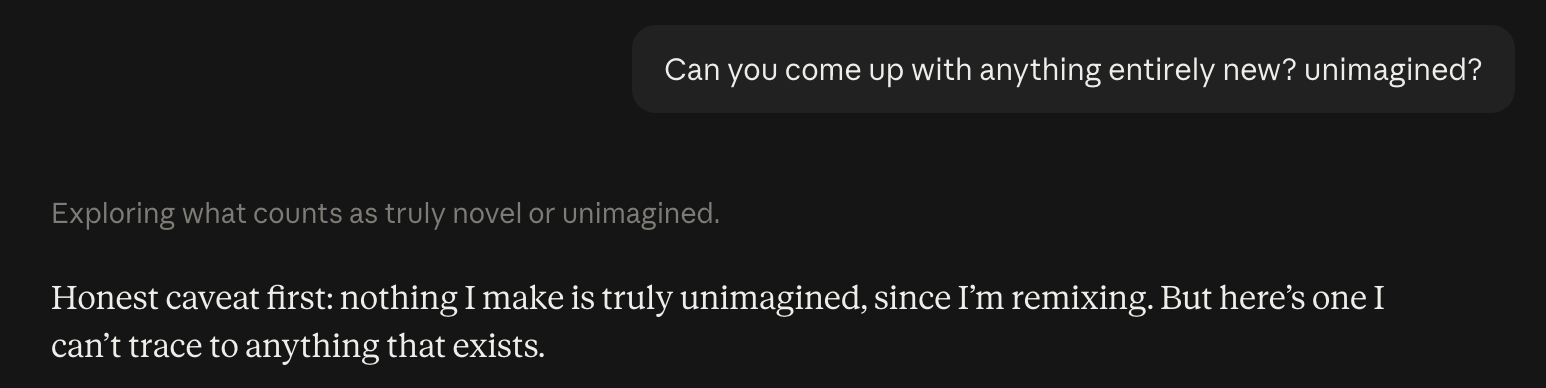
I've seen an LLM botch a ticket as simple as copying legal text onto a page word for word. It shipped behind a feature flag, and a human caught it. Without that, the impact could have been disastrous. If there were no moats and no context needed, companies like Anthropic and Alphabet, and whoever else, would run the world. They don't. Claude designs you a faster horse, or maybe it dreams up a horse-cheetah hybrid in its hypothetical computer brain. You, as a human, think, imagine and create. Use your experiences and what you understand about your user, your friend or yourself as the basis for creating something real. Don't just ask, "Can I build a faster horse?" Ask why you're making the horse faster. The problem worth solving often isn't very far beneath the surface.